Stump Jumper Pass was originally opened on May 2, 2020, as a creative solution for a creek crossing — built from a downed cedar tree that had fallen naturally across the water. The name captures exactly what it was: a rugged, improvised passage that required a little agility to navigate.
Unfortunately, the pass met its match during the first real flooding event on the trail. When the water rose, the stumps started to float, and the original crossing was washed out.
Volunteers went back to work and rebuilt the crossing with a more permanent fix — the stumps have since been buried with concrete and steel to significantly increase their stability against future flood events.
Stump Jumper Pass is a reminder that building and maintaining trails in a Florida wetland is an ongoing challenge. Every feature on the trail system has been tested by nature — and improved by the dedicated volunteers who keep coming back to do the work.
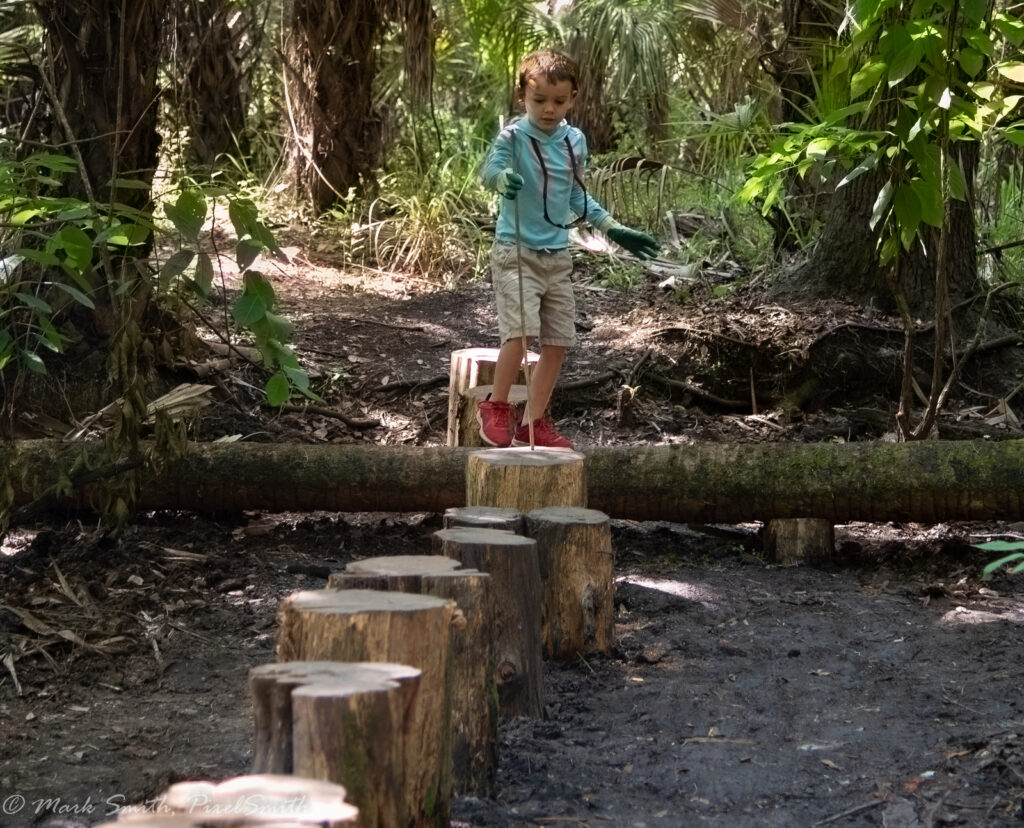
The Original Crossing — In Action
The pass living up to its name — a child stepping across the stumps. Photo by Mark Smith, PixelSmith.
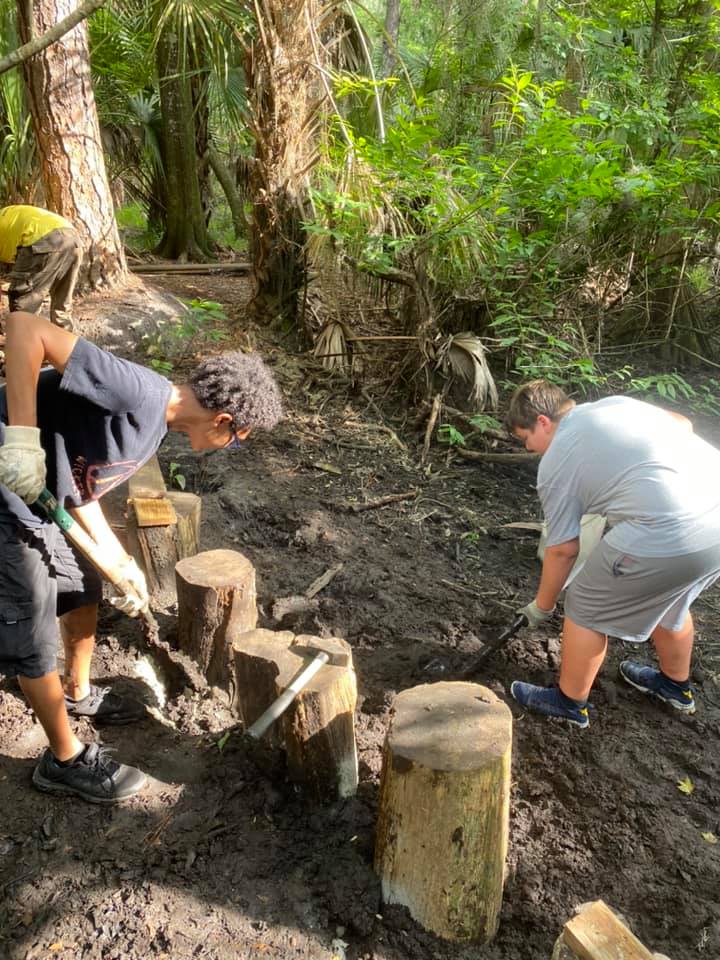
Reinforcing the Stumps
After the stumps floated during the first flood, volunteers dug them back in and anchored them with concrete and steel.
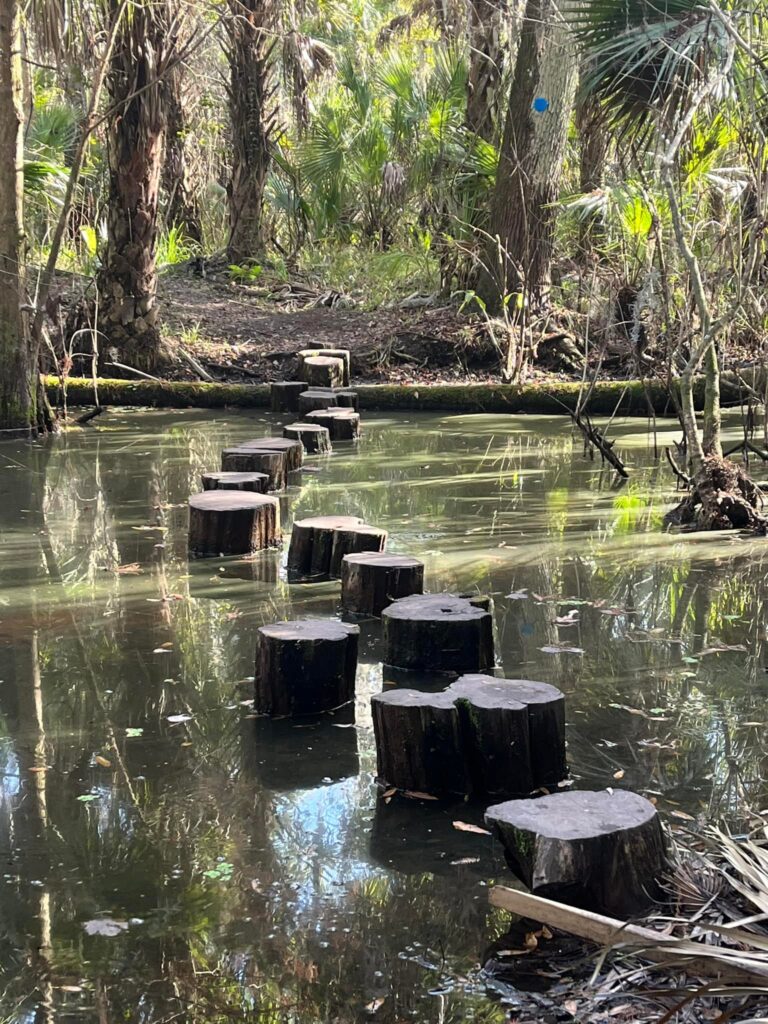
When the Water Rises
This is why the stumps needed concrete and steel. When the Alafia rises, the entire area floods — those are the tops of the stumps just barely above the waterline.
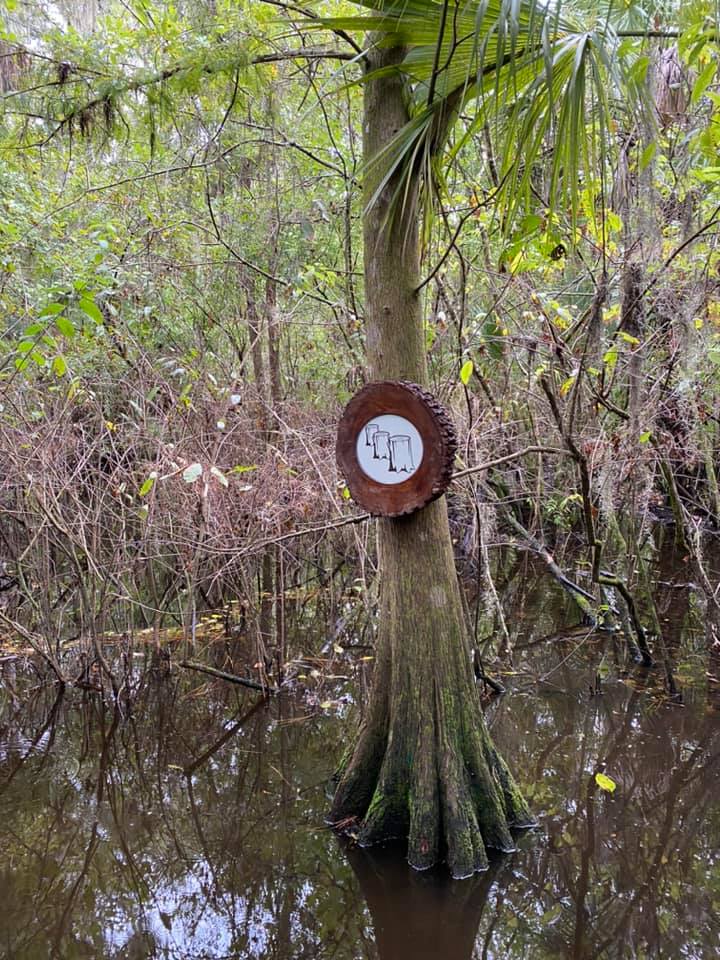
The Marker Sign
The marker sign — mounted on a cypress tree that's standing in flood water. Even the sign location tells the story.
All the amenities of the trail system are maintained by volunteers. Students can receive Bright Futures Service hours for helping. Follow trail events and contact the trail leaders at the Trails of River Hills Facebook page.